By Sandra Tyler
16 Mar, 2015
Botox, Fillers, Juevederm, Misc, News & Blogs
botox, collagen, Cosmetic Surgery, facial aging, fat transfer, fillers, hyaluronic acid, juevederm, non surgical, restelyn, wrinkles
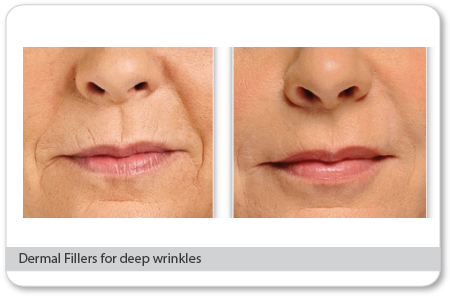
Fillers are popular. To help you decide whether this treatment is right for you and to have the treatment performed safely, the AAD provides the following facts.
What happens when I get a filler?
The procedure varies with the filler your dermatologist will use, the part of the body to be treated, and your medical history. Here are some general guidelines about what you can expect:
- Most filler treatments take between 15 and 30 minutes and require one office visit.
- Before getting the injections, you may need ice, an anesthetic applied to the skin, or a nerve block (an injection). This varies with the filler and area to be treated. Hands generally do not need anesthesia; lips often require a nerve block.
- Your dermatologist will inject the filler into the area, often giving you several injections to produce the best results.
- You may feel a stinging or burning sensation as the filler is injected.
- A few fillers require allergy testing to make sure you do not have an allergic reaction.
- If you need allergy testing, you must wait for the results from the allergy test before you can get the filler.
- If your own fat will be used as a filler, the entire treatment can often be completed in one day. You will first have a procedure called tumescent liposuction, which safely removes a small amount of fat from another area of your body. The fat removed from your body is then processed so that it can be injected into the area that needs more fullness.
What must I do after getting a filler?
Most patients can return to their everyday activities after leaving the office.
To reduce any redness and swelling from the injections, your dermatologist may recommend icing the area for 15 to 20 minutes before you leave.
Before you leave the office, you should be able to apply makeup.
After leaving the office, you should:
- Wait until the next day to exercise or do any other strenuous activity.
- Stay out of the sun and do not use a tanning bed or other type of indoor tanning.
- Avoid touching the treated area for three days, unless you receive instructions to massage the area.
- One filler, poly-L-lactic acid, requires you to gently massage the treated area for about 5 minutes several times a day for 1 to 2 weeks. Your dermatologist will tell you if you need to massage the area.
Is there downtime?
This varies with the filler. Most fillers do not cause downtime. Be sure to ask your dermatologist whether you will have downtime.
When will I see results after getting a filler?
This also varies with the filler. Most fillers fill the skin, so they produce immediate — or close to immediate — results. A filler also can stimulate your body to produce collagen, but this takes time.
Most fillers offer immediate results
| Filler |
When see results |
| Collagen |
Immediate |
| Hyaluronic acid gel |
Immediate |
| Calcium hydroxyl apatite |
Immediate |
| Poly-L-lactic acid |
2 or 3 weeks |
| Fat taken from your body |
Immediate |
| PMMA (polymethylmethacrylate) |
Immediate |
You may see other fillers advertised. All fillers listed above have been approved by the U.S. Food and Drug Administration (FDA), except for self-donated fat. This filler does not require FDA approval because it comes from your own body.
Will I look natural?
To get natural-looking results, the person injecting the filler must have expertise in placing the filler.
Dermatologists recommend not overdoing fillers. Your results will look more natural with a conservative approach. For example, patients who have very thin lips should not get dramatically fuller lips. Creating fuller lips in these patients could be extremely unflattering because the lips might start to resemble a duck’s bill.
How long will the results from fillers last?
Most fillers offer temporary results and require repeat treatments to maintain the results.
Temporary fillers offer one key advantage. These can be injected as needed to replace lost fullness. This is advantageous because no matter what we do, our skin continues to age.
How long fillers typically last
| Filler |
How long it lasts |
| Collagen |
2 to 3 months (often longer when treating scar) |
| Hyaluronic acid gel |
4 to 12 months |
| Calcium hydroxylapatite |
6 months to 1 year |
| Poly-L-lactic acid |
1 to 3 years |
| Fat taken from your body |
1 to 3 years (often longer when treating a scar) |
| PMMA (polymethylmethacrylate) |
permanent |
You should ask your dermatologist how long the recommended filler should last in the area you want treated.
When is it safe to get another treatment?
If you get a temporary filler, you can usually have another treatment when the signs of aging reappear.
What are the possible side effects?
After receiving filler injections, some patients have minor, temporary side effects where they were injected. You may have:
- Redness
- Swelling
- Tenderness
- Bruising (occasionally)
These side effects tend to clear within 7 to 14 days — if not earlier.
Serious side effects are more likely when the person injecting the filler does not have adequate medical training and experience. To protect your health, you should never get filler injections in a non-medical setting, such as non-medical spa, salon, or someone’s home.
When fillers are injected in a non-medical setting or by an inexperienced provider, reports of more serious side effects increase dramatically. These side effects include:
- Lumps.
- Ridges.
- Over-filled areas.
- Allergic reaction.
- Skin discoloration.
- Infection.
- Severe swelling.
What is the safety record for fillers?
This is one of the safest cosmetic treatments available. For years, dermatologists have been refining the use of fillers to diminish signs of aging. Today, dermatologists safely treat people of many ages and all skin colors.
More
By Sandra Tyler
13 Mar, 2015
Botox, Misc, News & Blogs
botox, brotox, enhancement procedure, face lift, facelift, freeze face, lifestyle lift, wrinkles
Ladies, you may be surprised to know what men talk about on “guy’s night out,” besides women and sports — “Brotox,” also commonly known to the rest of us as Botox (botulinumtoxin A). The long-time cosmetic enhancement procedure, often linked to women, has now reached a wide group of men who desire to appear more youthful. The number of men undergoing Brotox has gone up 10 percent from last year, but why? Amid fear of competition with younger folk in the workplace and in their personal lives.
“Any man’s afraid he’s gonna get bumped by somebody younger in business or personal life too. I think once he gets over the stigma of it being something feminine, I could see more men being drawn to it,” said an unidentified man.
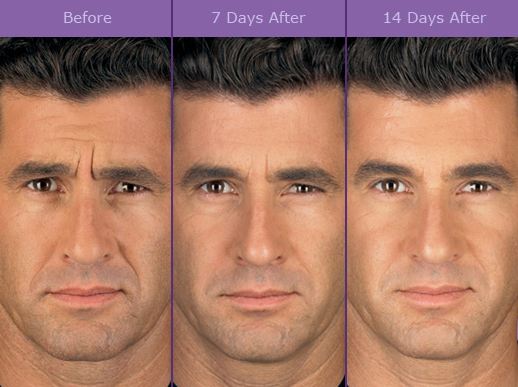
A multitude of men are currently making more appointments to “freeze” time and hold onto their eternal youth through this age defying treatment, but does the “freezing” effect work? Botox injections contain the bacterium Clostridium botulinum that can block signals from the nerves to the muscles so the muscle can no longer contract, preventing the onset of wrinkles when injected. The treatment is used on forehead lines, crow’s feet, or lines around the eye, and frown lines. However, men and women, should note wrinkles caused by sun damage and gravity do not respond to Botox injections.
The Botox procedure takes only a few minutes, with no anesthesia required. Patients will start to see results anywhere from three to seven days when the procedure begins to take effect. It is advised to avoid alcohol at least one week before treatment, and to stop aspirin and anti-inflammatory medications two weeks before treatment in order to reduce bruising associated with Botox.
Men have begun to adopt a more open attitude toward cosmetic procedures and have become more aware of the treatments available to them, as the age range of men being treated has widened. The BRO culture has fostered recent trends like the Hipster beard transplant, and now Brotox. The desire to climb the career ladder and keep up with the “younger-looking” has become the crucial reason why men opt for Botox — it’s surgery-free. Now, both men and women, vie to be the youngest and most desired of them all.
More
Kim Kardashian is boosting plastic surgeons’ bottom lines.
Two doctors’ organizations have tallied up the cosmetic procedures performed last year, and butt augmentation skyrocketed — as did a controversial surgery to reshape women’s genitals. Meanwhile, old-fashioned breast enlargement, still the most common cosmetic surgery, took a dip.
Surgeons say stars who celebrate their cabooses are fueling the surge, but critics contend it’s medical marketing that has convinced some Americans they need posterior padding at the cost of thousands of dollars and physical risks. Click Below to read more.
http://www.nbcnews.com/news/us-news/butt-augmentation-labiaplasty-rise-plastic-surgeons-say-n312996
More
Have you had a consult with Lifestyle Lift recently?
After helping Lifestyle Lift open in Orlando Florida several years ago and training some of their doctors, I am regretful to say that they have had the unfortunate and unexpected closing of the company. If you are still considering reducing the signs of aging through a mini facelift, please give us a call here at Artful Awakenings Cosmetic Surgery Center in historic downtown Melbourne. We would be happy to match or even reduce the previous price you were given. Don’t wait to call and schedule your free consultation today! 321-676-3101
More
Hotels in Melbourne FL | Residence Inn | Melbourne FL Hotels
The Residence Inn Melbourne hotel offers modern amenities, thoughtful guest services, and spacious accommodations to ensure all guests feel the comforts of home while still experiencing the quality of a Marriott hotel. Our hotel in Melbourne, FL is just 2.5 miles from Artful Awakenings, 1.5 miles from the Melbourne Airport and is convenient to I-95, Historic Downtown, Kennedy Space Center and Melbourne Beaches on Florida’s Space Coast. Standing out among hotels in Melbourne, FL, the Residence Inn Melbourne hotel features spacious and well-appointed suites to fit any business, government or leisure travel need. Guests can start their day with a free breakfast and unwind in the evening at our Social Hour, Monday through Wednesday. The Residence Inn Melbourne is a top choice among Melbourne, FL hotels.
Highlights
- Ideal for short and extended stays, our all-suite Melbourne, FL hotel offers high-speed Internet access and complimentary hot breakfast.
- One of the premier extended-stay hotels in Melbourne, FL, our all-suite accommodations boast full kitchens and separate areas for living & sleeping.
- The friendly staff at our hotel in the Melbourne, FL location is available 24 hours and works hard to ensure there guests feel right at home.
Hotel Information and Link:
Hotel Name: Residence Inn Melbourne
Address: 1430 South Babcock Street Melbourne Florida 32901 USA
Phone number: 321-723-5740
http://www.marriott.com/hotels/travel/mlbap-residence-inn-melbourne/
More
- Closed-mouth snoring indicates that your tongue is the cause of your snoring, and that some exercises and lifestyle changes should help eliminate the snoring.
- Open-mouthed snoring can be caused by sinus trouble or by posture in bed, and can be remedied by addressing those issues.
- Snoring from any position might indicate apena or other significant issues that will require more substantial medical treatment to address.
If you really want to stop snoring, you are going to have to work at it. First, you will have to work on finding the right solution. Then, you will have to work on using that solution every night. It’s not good enough to only use your anti-snore pillow once a week, or use your mouth guard every other day. If you truly want a happier and quieter night’s sleep, you may have to work hard to earn it! Rhinoplasty surgery should be your last option.
More
Think about your nose for a moment.
For good or bad, it’s one of the first things people notice about your appearance since it sits right in the center of your face. Now follow that thought with this comforting fact: no one’s nose is perfect–even those Hollywood actresses with seemingly flawless features and nostrils have small imperfections.
Noses get noticed. That’s why countless nose jobs (or rhinoplasty if we use the technical name) are performed each year. Part of the reason is the bike rides, rock climbing, baseball, football, skateboarding and surfing activities take their toll on noses. When accidents happen, rhinoplasty procedures usually follow. But accidents aren’t the only reason for a nose job. There are good reasons for a nose job that are both medical and cosmetic. No matter the reason, let’s look at 3 reasons to get a nose job.
Reason #1: Your Nose Is Repaired for Medical Reasons
You’ve likely heard of a deviated septum. A deviated septum is the medical name for a condition where the center cartilage of the nose (the nasal septum) is off-center. A deviated septum creates difficulty breathing through the nose. Typically, the condition is more pronounced on one side of the nose and can sometimes result in sinusitis or sinus infections.
It’s estimated that more than 80-percent of all nasal septums are off-center. When a doctor diagnoses a deviated septum, he or she will perform a septoplasty, which is the surgical correction of a deviated septum. Septoplasties are typically not peformed on patients younger than 18 because the septum grows until age 18.
Many people are born with a deviated septum. Others have experienced some sort of accident or trauma and the result is that the internal cartilage in their nose has shifted and prevents them from breathing easily.
The Ear, Nose and Throat doctors will diagnose your condition and perform a septoplasty that ultimately improves breathing. Even better for family members and sleeping partners, repairing s deviated septum typically results in less snoring. So those sleepless nights for the snorers and those who live in close proximity may quickly come to and end.
“Sleeping and exercise are dramatically improved after septoplasty,” adds Dr. Bennett.
Reason #2: Your Nose is Damaged in an Accident
Florida residents love to exercise. They love to get outside and push themselves to their limits. But gravity and blunt force trauma have a great way of bringing us back to earth and we often treat broken noses on patients who face-planted while running or took a nasty elbow to the face during a game.
Car accidents are another likely culprit in creating broken noses. The good news is that if a broken nose is treated within two weeks of the accident, the results are very positive.
“After a nose is broken and displaced, we have about a two-week window in which we can return the nasal bones into their correct position with little trouble,” says Dr. Filiberto. “After two weeks, the bones become fixed in the fractured position and it is much more difficult to straighten.”
Some patients consider their adjusted nose an improvement on the old one. Our advice following nose surgery is to take it easy, but some Floridians never learn. Guess that’s the curse of living in a state where going nose-to-nose with your competition and the elements is a passion.
Reason #3: You Choose a Nose Job for Cosmetic Reasons
Your nose is one of your most prominent features. For good or bad. Some patients may have nose bumps they would like smoothed. Others may feel their nose is too big or too small. Still others may have had a rhinoplasty in the past and are unhappy with the results. Whatever your reason for seeking a nose job, the Ear, Nose and Throat Center wants to help you feel good about your nose and your appearance.
“The ideal nose should complement the face, and not detract from it,” says Dr. Filiberto. “When we look at a person, we look at the eyes, the mouth, the hair. If a nose calls attention to itself, that can be a distraction. The nose can ‘make or break’ a face.”
A good nose job can help raise your self esteem. A bad nose can knock it down. We specialize in great nose jobs. Yet while a great nose job can help you feel more confident about your appearance, it can’t change deeper self-esteem issues. And we want to be sure you have realistic expectations about how a nose job will impact your life. So we will spend time with you discussing rhinoplasty options long before we ever operate.
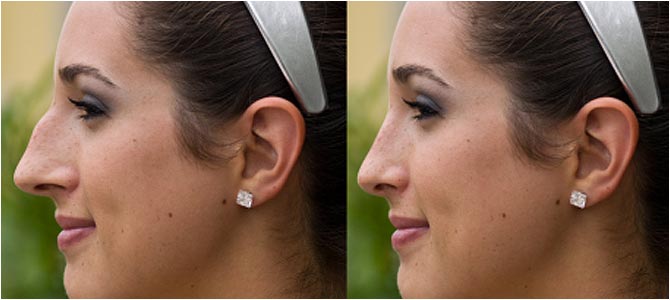
The best rhinoplasty is simply removing the faults of the nose and, in the end, the nose does not look ‘operated’ on.
More
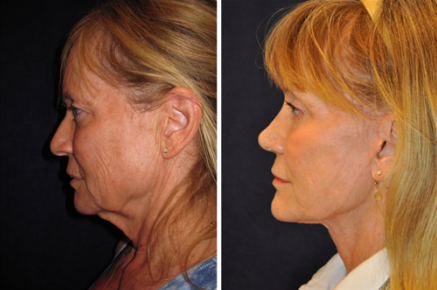
There is no one age that is considered ideal for a Facelift Surgery. Patients can be in their late 30s or upper 70s and still be a good candidate for surgery, as long as they are in good health. Overall, the results of a facelift or facial rejuvenation surgery done in your 40’s or 50s will be more natural than in your late 60s or 70s.
Facial aging changes start to become noticeable in the late 30’s for most people. As these changes progress through the 40’s and 50’s deep facial lines caused by skin folds and loss of facial volume from fat loss create permanent skin changes that are difficult to correct with a facelift alone. Taking action early, in your 40’s or 50’s by having a Facelift or Volume enhancement by Fillers or Fat will help prevent these permanent changes. The most important factor is not really your age but whether or not you have facial aging changes which can be corrected with a Facelift.
More