A new cosmetic surgery s on the rise because of an unflattering sag. It seems as if ear lobes are one of the first signs of aging and in order to curb this unattractive droop women everywhere are getting an ear lift. “Gravity takes its toll on earlobes — they droop like chins and breasts do, and can make you look older.”
And while age can play a big part in droopy lobes, another factor can be wearing heavy earrings too often.
“Years of wearing heavy earrings also cause the lobe to get stretched out of shape. An earlobe reduction is a simple operation that reshapes the earlobe to a better proportion. Another issue for women is a torn earlobe, where the hole from a pierced ear gets so stretched that the lobe tears open and has to be stitched together.”
But if going under the knife isn’t exactly something you would want to do, scientists have been developing other methods as well.
“Most clients want to have their ears plumped up with a bit of filler, to make them look younger and fuller. It’s quick, easy and relatively pain-free,” said Lesley.
More
With all of the celebrities wearing high heels upwards of 7 inches nowadays, us regular folk have been having a hard time of it. With intense and blinding foot pain, wobbling around rather than strutting, the countless falls (yes, that is how I got a hole in the knee of my favorite black jeans), and God forbid…stairs…how do we girls do it?
Well, it would appear women all across the globe have been turning to the surgeon’s knife to ensure that their feet are high heel friendly. New research has shown that the number of cosmetic procedures that have been performed on feet have doubled in the last year. The procedure, known as the “Toe Job” takes around 20 minutes and is apparently pain-free and creates a pillow effect by injecting collagen into the foot. It reportedly eliminates the painful burning that is generally associated with wearing high heels. The treatment costs £320 ($519) and can last up to 6 months.
Crazy what people will do for fashion!
More
By Sandra Tyler
16 Mar, 2015
Botox, Breast Augmentation, Butt Augmentation, Comfort Anesthesia, Ear Surgery, Face Lift, liposuction, Rhinoplasty
Cosmetic Surgery, liposuction, plastic surgery, rhinoplasy
When it comes to social media, we’re huge advocates of using it to the best of your abilities. It opens up communication, allows us to share photos and ideas with our friends, and in general, gives everyone a voice. Today, however, we found out social media is doing another influential thing: contributing to the plastic surgery craze (it’s okay if you need to re-read that last sentence, we get it).
According to the American Academy of Facial Plastic and Reconstructive Surgery, reports on their annual findings on surgery found that the world of social media is strongly linked to the increase in plastic surgery, mainly because Facebook, Twitter, Instagram and the like are making those who frequently use the sites more critical of themselves. Below are some of the statistics from the study that have us a little concerned:
- Because of social media photo sharing, 31% of surgeons have seen an increase in requests for plastic surgery because patients have a more critical eye on themselves.
- 73% of procedures (up from 62% the previous year) were cosmetic versus reconstructive in nature.
- Studies show that people are more drawn towards images in specific proportions, like facial features, making them more aesthetically pleasing.
So what does this all mean? When people look at pictures of themselves on social media, they’re looking at much more than just themselves. They’re also comparing themselves to the people that they follow, whether they be friends, models, celebrities, etc. and users are being much more critical of themselves because of the comparisons they’re making. This, in turn, is contributing to a rise in plastic surgery requests. Call us crazy, but we’re pretty sure that one or two bad Instagram photos aren’t worth thousands of dollars in surgery to look like someone else.
More
As we pointed out earlier today, South Korea has been pumping out the crazy (amazing) beauty trends lately—but this is one that may be just plain insane. A clinic there, AONE, is now offering a surgery called the “smile lipt,” which lifts the patient’s lips into a permanent smile. “Mouth corners lift up very naturally after surgery, and although mouth corners stay upturned on an impassive face, they lift up even more distinctively during a smile,” said Kwon Taek Keun, a surgeon and the clinic’s founder. The procedure “corrects” any sagging or asymmetric mouth corners. Basically, it’s a cure for “bitch face.”
Maybe this sounds great to some people (the Joker? Miss America contestants?) but to me, it’s straight out of a dark, dystopian future where everyone is relentlessly chipper. I apparently suffer from bitch face myself—I’m frequently asked if I’m angry or upset when I’m nothing of the kind. And as much as I hate people asking why I’m annoyed when I’m merely sleepy or concentrating on what I want to eat for dinner, I think it would be much worse to look perpetually happy thanks to a creepy permanent smile plastered on my face. Having the same expression whether I’m at Disney or a wake? I’ll pass, thank you.
More
Gravity won big at the Oscars, but the American public parted with more than $12 billion last year trying to defy it. According to figures to be released today by the American Society for Aesthetic Plastic Surgery (ASAPS), spending on plastic surgery and other cosmetic procedures has increased by nearly $1.5 billion. Slightly less popular than the previous year—but still the number-one operation among women—was breast augmentation, with 313,000 surgeries. Liposuction came in second (312,000 procedures) among women, followed by tummy tucks (151,000), breast lifts (137,000), and eye lifts (133,000).
It was also a good year for face-lifts. Although that particular surgery has not been in the top five for years, in 2013 the number of procedures jumped from 107,000 to 117,000—the highest number ever recorded—and that in spite of the ready availability of filler injections that can refresh the face without incisions. As for women’s nonsurgical interventions, no surprises there: Botox and similar injections topped the list with a whopping 3.4 million procedures, up from 2.9 million in 2012. Hyaluronic acid fillers were number two, up 32 percent; and photo rejuvenation, also called intense pulsed light, was up 34 percent.
More
Protein is the name given to a group of large, complex molecules that form the basis of tissues in living organisms. These groups, which consist of one or more long chains of amino acid residues, perform a huge number of essential roles in our bodies, including aiding the growth and repair of cells, maintaining immune function and much more.
When we are deficient in protein, we begin to suffer from fatigue, slow healing, muscle atrophy and other unpleasant symptoms. Therefore, it’s important that we obtain enough protein from our diets to remain in optimal health. But which whole foods contain the highest amounts of this essential macronutrient? Though opinions on this subject differ, the following foods tend to provide the highest protein-calorie ratio.
Chicken — There’s a good reason why chicken is a popular food with bodybuilders. One average-sized chicken breast supplies our bodies with a whopping 17 grams of protein, making it one of the most protein-dense foods in existence. The legs and thighs of the chicken are also packed with protein, as well as large amounts of selenium, niacin, vitamin B6 and phosphorous.
Of course, the meat of chickens raised on organic, sustainable farms is the healthiest. If you are going to stick with non-organic chicken, consider removing the skin from the meat; this is where the toxins accumulate.
Fish — Most fish is an excellent source of protein, but salmon, tuna, snapper and halibut seem to be particularly rich sources of it. One fillet of each contains around 22 grams of protein, while perch, flounder, sole, cod and tilapia contain between 17 to 21 grams of it. Fish is also rich in omega-3 fatty acids, which keep our heart and brain healthy, as well as vitamin D, riboflavin, calcium and magnesium.
Sadly, not all fish is safe to eat these days due to the ongoing contamination of our oceans. To minimize the risk of toxicity, favor sustainably caught fish sourced from the Atlantic Ocean when possible.
Pork — One pork chop provides 33 grams of protein, which is more than half of the recommended daily intake of protein for adult women (46 grams) and adult men (56 grams). Other pork products, such as pork roast, ham and bacon, are also good sources of protein.
Pigs are widely considered to be dirty animals, and for good reasons. Aside from digesting their food in a mere 4 hours (compared to 24 hours in ruminant animals), pigs lack the sweat glands necessary for detoxification, making them walking vessels of harmful organisms. For this reason, pork should always be purchased from reputable organic farms.
Beef — Though red meat tends to contain a lower protein-calorie ratio than white meat, it’s still famously rich in protein. One T-bone steak, for instance, supplies us with around 19 grams of protein, as well as large amounts of bio-available iron, zinc and vitamin B12. Even processed beef products, such as beef jerky, contain respectable amounts of protein.
Eggs — One large egg contains 6 grams of protein, making eggs one of the finest protein sources for vegetarians. Though most of this protein is contained in the white, don’t forget to eat the yolk too; this is where the other essential nutrients, including the vision-boosting carotenoids, lutein and zeaxanthin are held.
Greek yogurt — According to Bodybuilding.com, an 8-ounce serving of Greek yogurt supplies us with 23 grams of protein, making it the most concentrated dairy source of protein. Greek yogurt, which has been strained to remove its whey content, is also a fantastic source of probiotics. Favor organic, unsweetened brands when possible.
Other great whole food sources of protein include unprocessed cheeses, legumes, nuts, seeds, certain gluten-free grains (such as buckwheat and quinoa), spirulina and chlorella.
More
Cosmetic plastic surgery is on the rise. In the current job market, it seems tattoo removal–much like eyelid surgery in Asia–is becoming a new path to employment. From botox injections to breast augmentations, revamping the human body is a desire shared by earth-conscious individuals and unconcerned beauty seekers alike.
But is it possible to be eco-friendly and still partake in an elective surgical alteration of the body? Can tattoo removal be considered any more or less drastic a process than getting a tattoo in the first place? Is there a limit to which procedures are environmentally friendly “enough” to be acceptable to the green community?
Procedures should be weighed individually. An earth-conscious surgery seeker could consider his or her options by analyzing the type and source of the chemicals or fillers used in a given procedure, the source and ethical origins of the equipment used to laser the tattoo or slice the skin, the end location of surgery waste products, and even the fumes or particles put into the air that the practitioners have to inhale during the surgery.
Setting aside the controversy over self-esteem issues and the ideal of aging gracefully, cosmetic surgery is not likely to disappear from the radar any time soon. Those with an eye on a future procedure for themselves might do well to encourage the industry to green itself up.
Bottom Line is: The short (but not so satisfying) answer to the possibility of green plastic surgery is, “Maybe.”
In some ways, the cosmetic surgery industry is already moving in a greener direction. Breast implant material is likely to eventually be human tissue, and the source and type of chemicals used in some procedures (such as chemical peels and lip injections) boast more ethical and sustainable ingredients and sources every year. Although these are steps in the vein of improving and protecting human and environmental well-being, even natural or ethically produced ingredients may be unhealthy for human use or damaging to the environment.
If you are considering a cosmetic surgery procedure, just think about doing your due diligence. There are many ways to achieve health and beauty without harm to the environment. If you do opt for a surgical or chemical alteration, ask your surgeon about the issues that are important to you. Inquire about the origin of products and surgical materials before consenting to a procedure if the sustainability and ecological impact of your choice is likely to affect your decision. The more frequently clients request eco-friendly practices, the greener the future of plastic surgery is likely to become.
More
By Sandra Tyler
16 Mar, 2015
Esthetician, extractions, facial, facial rejuvenation, skin care
beauty sleep, Cosmetic Surgery, dark circles, facial, plastic surgery, skin care, skin repair, skin restoration
There are numerous myths about beauty and skin care that keep popping up no matter how wrong they are, yet every once in a while a beauty myth turns out to be true. Such is the case with beauty sleep. It’s a real thing, and you definitely need to be getting enough of it.
It could be you didn’t need to read what I wrote above in order to know that beauty sleep is a real thing. You know it just from looking in the mirror after not getting enough sleep. Lack of sleep causes dark under-eye circles, your skin looks less than great, and your fine lines or wrinkles appear more pronounced. In the WebMD article Are You Getting Enough Beauty Sleep? dermatologists had the following to say about beauty sleep:
“Lack of sleep causes blood vessels to dilate, causing the look of dark circles,” says dermatologist Sonia Badreshia-Bansal, MD, of the University of California, San Francisco. Sleepily rubbing your eyes doesn’t help those dark rings.
Not enough sleep can also make you more stressed, and everyone can see that tension. “It makes you look angry, tired, sad, and certainly older,” says New York City dermatologist Doris Day, MD.
What exactly is happening to your skin when you do not get enough sleep? Dr. Ellen Marmur explains in her excellent book Simple Skin Beauty: Simply put, if you sleep too little, you’re not giving your body time to repair itself. The nervous system has two states that are in balance. The sympathetic system, which is more in control while we’re awake, keeps the blood flow near the core of the body. While we sleep, the parasympathetic nervous system runs the show and blood flow shifts to the skin. Additionally, skin isn’t under attack from the sun and the elements at night. This relaxed parasympathetic state allows greater circulation and oxygen flow to the skin, or peripheral vasodilation in medical terms. This is when the skin gets a lot of internal attention and repair mechanisms go into action, much like the night workmen at Disneyland who fix and restore the rides and clean the place up before the part opens the next day. Receptors spring to life within the blood vessels and grab amino acid molecules (the building blocks) to help build more collagen, and fluid and toxins are drained.
Without enough rest, the skin doesn’t get this repair and restoration, and all that important activity isn’t being done. One example: when excess fluid near the skin isn’t transported to the bladder to be excreted, the result is puffiness. … It shows up most around the eyes because there’s less fat in that area, so water retention is more apparent.
After all this bad news luckily there is a bit of good news when it comes to sleep and your skin. According to Dr. Day our skin recovers quickly once you are able to get a good night’s rest. So just because you missed out on getting enough sleep a few nights in a row doesn’t mean that you’ve damaged your skin for good. And just how much sleep do you need? That varies from individual to individual. Some people do fine with only 7 hours of uninterrupted sleep while others need 8 or 9 hours. That is something that you have to determine for yourself.
In order to make sure you get your much needed shut-eye create a soothing bedtime routine. Stop drinking caffeinated drinks in the afternoon, keep to a set sleep schedule as much as possible, and make your bedroom a sleep sanctuary. Your skin will thank you for it.
More
By Sandra Tyler
16 Mar, 2015
Esthetician, facial rejuvenation, facials, Laser, skin care, spa
boost collagen, broken capillaries, brown spots, facial redness, Facial Rejuvenation, intense pulse light, IPL, laser treatment, LED, light-emitting diode, photo facial, spider veins, treat acne
Laser resurfacing is a generic term for a skin treatment that uses some kind of light-based technology. Photo facials (sometimes called foto facials ) have a number of different uses, but are mostly used for treating brown spots, broken capillaries, and boosting collagen.
The two main types of technology used for photo facials are LED (light-emitting diode) and IPL (intense-pulsed light). They are completely different, so it’s extremely important to understand which photo facial technology is being used. That way you are more likely to get the results you hope to achieve.
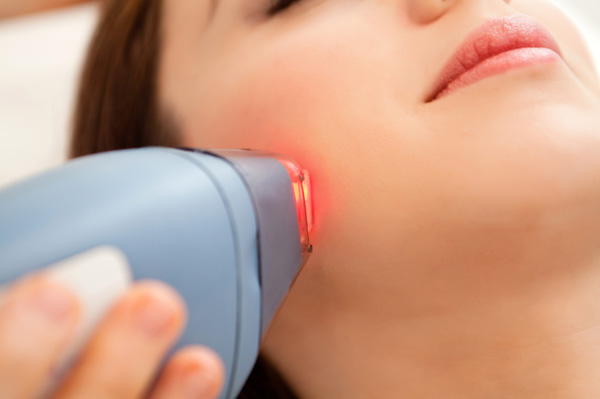
An LED photo facial is a very gentle treatment that uses narrow spectrum light to boost collagen, which creates plumper, younger-looking skin, or to kill the bacteria that causes acne. This type of photo facial is more likely to be found in a day spa with a serious focus on esthetics.
LED photo facials are painless, cool and relaxing, and (unlike IPL or laser treatments) carry no risk of burning. The best results come after a series of photo facial treatments. To begin, a series of six treatments with a one-to two weeks between is recommended. After that, maintain with a treatment every month or two. It can be part of a facial or a stand-alone treatment.
LED photo facials are a good choice for people who want to boost collagen or treat acne. Their collagen-boosting, facial rejuvenation properties have been proven with medical research. The results won’t be as dramatic as plastic surgery, but it’s a gentler, more natural, less expensive way to go.
Medical spas have IPL (intense-pulsed light), which is a type of laser treatment, a photo facial. An IPL photo facial can treat a variety of skin conditions such as brown spots, broken capillaries, spider veins, and facial redness. An IPL photo facial delivers a bright blast of light at very high energy levels through a hand-held device. While some IPLs have cooling devices, it can be uncomfortable, even painful.
An IPL photo facial is the better choice if you have brown spots, broken capillaries or overall redness, called diffused facial redness. The number of IPL photo facials you need will vary depending on the condition you’re treating, the results you want, and how your skin responds.
Photo facials work best in conjunction with a regular skin care routine that you develop with your esthetician.
More
Some people have beautiful skin naturally, and some have to work at it. But clear skin is within the reach of everyone.
If you have blackheads, clogged pores and acne, it’s best to work with a good esthetician to clean up your skin with regular facials. She or he will recommend products that will help keep your skin clear. The products are more expensive, but they use better ingredients and are more effective and than the products on the drug store shelves.
If you’re young and your skin is beautiful and clear, don’t mess it up with overly aggressive treatments (i.e., destroying your skin with apricot kernel scrub). Again, having a quality skin care routine from a young age is important, and a good esthetician can help you set that up. The products you use can change depending on the season, where you live, your age, and your individual skin conditions.
Here are seven other habits you need to keep your skin beautiful:
- Eat a healthy diet with lots of fruits, vegetables and leafy green. Good nutrition is the basic building block of healthy skin.
- Drink plenty of water every day. (I fill a carafe to remind myself.)
- Cut out skin-damaging habits like smoking, excessive drinking, tanning booths and excessive sun exposure.
- Search out a good esthetician by asking friends and doing some research. Then work with her (or him) on a regular basis. Get a professional facial to deep cleanse your skin and review your product choices at least four times a year, as the seasons change. Every four to six weeks is ideal.
- Throw away the soap and use quality products that are right for your skin type. Discuss your home skin-care routine with an esthetician. If you can’t afford all the skin-care products right away, ask the esthetician which are most important to start. Invest in additional products as you can.
- Give yourself a home facial as often as once a week.
- Wear sunscreen, even on cloudy days and in winter. Use a good-quality, high-SPF, full-spectrum sunscreen. Sun damage is the single most important cause of premature aging. I use Ti-Silc Sheer SPF 45Sunblock compare prices. It’s reasonably priced and doesn’t sting sensitive skin. Remember to put sunscreen on exposed areas like the back of your hands, neck and chest. They’re often the first place to show your age.
More