Cosmetic plastic surgery is on the rise. In the current job market, it seems tattoo removal–much like eyelid surgery in Asia–is becoming a new path to employment. From botox injections to breast augmentations, revamping the human body is a desire shared by earth-conscious individuals and unconcerned beauty seekers alike.
But is it possible to be eco-friendly and still partake in an elective surgical alteration of the body? Can tattoo removal be considered any more or less drastic a process than getting a tattoo in the first place? Is there a limit to which procedures are environmentally friendly “enough” to be acceptable to the green community?
Procedures should be weighed individually. An earth-conscious surgery seeker could consider his or her options by analyzing the type and source of the chemicals or fillers used in a given procedure, the source and ethical origins of the equipment used to laser the tattoo or slice the skin, the end location of surgery waste products, and even the fumes or particles put into the air that the practitioners have to inhale during the surgery.
Setting aside the controversy over self-esteem issues and the ideal of aging gracefully, cosmetic surgery is not likely to disappear from the radar any time soon. Those with an eye on a future procedure for themselves might do well to encourage the industry to green itself up.
Bottom Line is: The short (but not so satisfying) answer to the possibility of green plastic surgery is, “Maybe.”
In some ways, the cosmetic surgery industry is already moving in a greener direction. Breast implant material is likely to eventually be human tissue, and the source and type of chemicals used in some procedures (such as chemical peels and lip injections) boast more ethical and sustainable ingredients and sources every year. Although these are steps in the vein of improving and protecting human and environmental well-being, even natural or ethically produced ingredients may be unhealthy for human use or damaging to the environment.
If you are considering a cosmetic surgery procedure, just think about doing your due diligence. There are many ways to achieve health and beauty without harm to the environment. If you do opt for a surgical or chemical alteration, ask your surgeon about the issues that are important to you. Inquire about the origin of products and surgical materials before consenting to a procedure if the sustainability and ecological impact of your choice is likely to affect your decision. The more frequently clients request eco-friendly practices, the greener the future of plastic surgery is likely to become.
More
By Sandra Tyler
16 Mar, 2015
Esthetician, extractions, facial, facial rejuvenation, skin care
beauty sleep, Cosmetic Surgery, dark circles, facial, plastic surgery, skin care, skin repair, skin restoration
There are numerous myths about beauty and skin care that keep popping up no matter how wrong they are, yet every once in a while a beauty myth turns out to be true. Such is the case with beauty sleep. It’s a real thing, and you definitely need to be getting enough of it.
It could be you didn’t need to read what I wrote above in order to know that beauty sleep is a real thing. You know it just from looking in the mirror after not getting enough sleep. Lack of sleep causes dark under-eye circles, your skin looks less than great, and your fine lines or wrinkles appear more pronounced. In the WebMD article Are You Getting Enough Beauty Sleep? dermatologists had the following to say about beauty sleep:
“Lack of sleep causes blood vessels to dilate, causing the look of dark circles,” says dermatologist Sonia Badreshia-Bansal, MD, of the University of California, San Francisco. Sleepily rubbing your eyes doesn’t help those dark rings.
Not enough sleep can also make you more stressed, and everyone can see that tension. “It makes you look angry, tired, sad, and certainly older,” says New York City dermatologist Doris Day, MD.
What exactly is happening to your skin when you do not get enough sleep? Dr. Ellen Marmur explains in her excellent book Simple Skin Beauty: Simply put, if you sleep too little, you’re not giving your body time to repair itself. The nervous system has two states that are in balance. The sympathetic system, which is more in control while we’re awake, keeps the blood flow near the core of the body. While we sleep, the parasympathetic nervous system runs the show and blood flow shifts to the skin. Additionally, skin isn’t under attack from the sun and the elements at night. This relaxed parasympathetic state allows greater circulation and oxygen flow to the skin, or peripheral vasodilation in medical terms. This is when the skin gets a lot of internal attention and repair mechanisms go into action, much like the night workmen at Disneyland who fix and restore the rides and clean the place up before the part opens the next day. Receptors spring to life within the blood vessels and grab amino acid molecules (the building blocks) to help build more collagen, and fluid and toxins are drained.
Without enough rest, the skin doesn’t get this repair and restoration, and all that important activity isn’t being done. One example: when excess fluid near the skin isn’t transported to the bladder to be excreted, the result is puffiness. … It shows up most around the eyes because there’s less fat in that area, so water retention is more apparent.
After all this bad news luckily there is a bit of good news when it comes to sleep and your skin. According to Dr. Day our skin recovers quickly once you are able to get a good night’s rest. So just because you missed out on getting enough sleep a few nights in a row doesn’t mean that you’ve damaged your skin for good. And just how much sleep do you need? That varies from individual to individual. Some people do fine with only 7 hours of uninterrupted sleep while others need 8 or 9 hours. That is something that you have to determine for yourself.
In order to make sure you get your much needed shut-eye create a soothing bedtime routine. Stop drinking caffeinated drinks in the afternoon, keep to a set sleep schedule as much as possible, and make your bedroom a sleep sanctuary. Your skin will thank you for it.
More
By Sandra Tyler
16 Mar, 2015
Esthetician, facial rejuvenation, facials, Laser, skin care, spa
boost collagen, broken capillaries, brown spots, facial redness, Facial Rejuvenation, intense pulse light, IPL, laser treatment, LED, light-emitting diode, photo facial, spider veins, treat acne
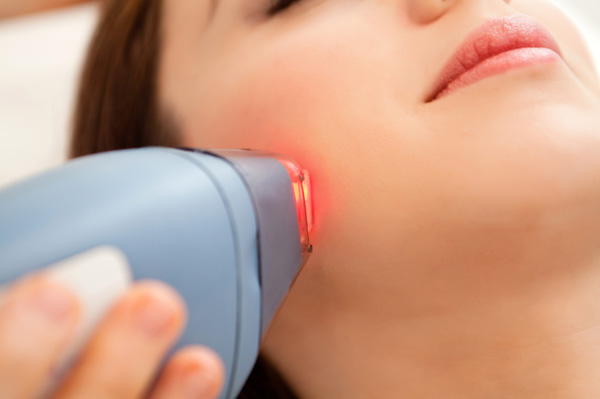
Laser resurfacing is a generic term for a skin treatment that uses some kind of light-based technology. Photo facials (sometimes called foto facials ) have a number of different uses, but are mostly used for treating brown spots, broken capillaries, and boosting collagen.
The two main types of technology used for photo facials are LED (light-emitting diode) and IPL (intense-pulsed light). They are completely different, so it’s extremely important to understand which photo facial technology is being used. That way you are more likely to get the results you hope to achieve.
An LED photo facial is a very gentle treatment that uses narrow spectrum light to boost collagen, which creates plumper, younger-looking skin, or to kill the bacteria that causes acne. This type of photo facial is more likely to be found in a day spa with a serious focus on esthetics.
LED photo facials are painless, cool and relaxing, and (unlike IPL or laser treatments) carry no risk of burning. The best results come after a series of photo facial treatments. To begin, a series of six treatments with a one-to two weeks between is recommended. After that, maintain with a treatment every month or two. It can be part of a facial or a stand-alone treatment.
LED photo facials are a good choice for people who want to boost collagen or treat acne. Their collagen-boosting, facial rejuvenation properties have been proven with medical research. The results won’t be as dramatic as plastic surgery, but it’s a gentler, more natural, less expensive way to go.
Medical spas have IPL (intense-pulsed light), which is a type of laser treatment, a photo facial. An IPL photo facial can treat a variety of skin conditions such as brown spots, broken capillaries, spider veins, and facial redness. An IPL photo facial delivers a bright blast of light at very high energy levels through a hand-held device. While some IPLs have cooling devices, it can be uncomfortable, even painful.
An IPL photo facial is the better choice if you have brown spots, broken capillaries or overall redness, called diffused facial redness. The number of IPL photo facials you need will vary depending on the condition you’re treating, the results you want, and how your skin responds.
Photo facials work best in conjunction with a regular skin care routine that you develop with your esthetician.
More
Some people have beautiful skin naturally, and some have to work at it. But clear skin is within the reach of everyone.
If you have blackheads, clogged pores and acne, it’s best to work with a good esthetician to clean up your skin with regular facials. She or he will recommend products that will help keep your skin clear. The products are more expensive, but they use better ingredients and are more effective and than the products on the drug store shelves.
If you’re young and your skin is beautiful and clear, don’t mess it up with overly aggressive treatments (i.e., destroying your skin with apricot kernel scrub). Again, having a quality skin care routine from a young age is important, and a good esthetician can help you set that up. The products you use can change depending on the season, where you live, your age, and your individual skin conditions.
Here are seven other habits you need to keep your skin beautiful:
- Eat a healthy diet with lots of fruits, vegetables and leafy green. Good nutrition is the basic building block of healthy skin.
- Drink plenty of water every day. (I fill a carafe to remind myself.)
- Cut out skin-damaging habits like smoking, excessive drinking, tanning booths and excessive sun exposure.
- Search out a good esthetician by asking friends and doing some research. Then work with her (or him) on a regular basis. Get a professional facial to deep cleanse your skin and review your product choices at least four times a year, as the seasons change. Every four to six weeks is ideal.
- Throw away the soap and use quality products that are right for your skin type. Discuss your home skin-care routine with an esthetician. If you can’t afford all the skin-care products right away, ask the esthetician which are most important to start. Invest in additional products as you can.
- Give yourself a home facial as often as once a week.
- Wear sunscreen, even on cloudy days and in winter. Use a good-quality, high-SPF, full-spectrum sunscreen. Sun damage is the single most important cause of premature aging. I use Ti-Silc Sheer SPF 45Sunblock compare prices. It’s reasonably priced and doesn’t sting sensitive skin. Remember to put sunscreen on exposed areas like the back of your hands, neck and chest. They’re often the first place to show your age.
More
By Sandra Tyler
16 Mar, 2015
Esthetician, facial, facials, skin care, spa
blackheads, clogged pores, facial, skin care, skin type, spa, treat yourself
How often you should get a facial depends on your skin type — normal, combination, dry, or oily. If you have oily, acne-prone skin with breakouts, blackheads and clogged pores, you should get a facial every two weeks until it is cleared out and calmed down. As you skin improves, you can stretch it out longer until you’re on a schedule where your skin stays relatively clean and clear. If you have normal, combination, and dry skin, a once-a-month facial is usually fine.
Skin condition is whatever the esthetician notices at the time of your facial — dryness, dehydration, redness, blackheads, dull skin, etc. You might come more often than monthly if you have acne, a lot of blackheads or whiteheads you want to get cleared out, or if you have skin that would benefit from a series of treatments like peels, light therapy, or microdermabrasion.
Other Factors That Affect How Often You Should Get A Facial
- Skin Care Goals. If you want to have your best possible skin for a lifetime, find a great esthetician early in life, get on a good skin care regime, and follow it. Not everyone puts a high priority on personal appearance.
- Age. Unless they have oily skin and breakouts, younger people can usually get facials less frequently because their skin naturally generates new cell growth faster. When you’re young, your biggest priority is to be on a good skin-care regime, keep the skin clear of blackheads, and have a strategy to deal with breakouts. As you age, you might go more often and spend more on treatments that are done in a series, such as peels, light therapy, or microdermabrasion.
- Budget. Income and budget affects how much money you have available for facials and skin care. Try to at least get a facial once every three months, and make the investment in quality products.
- Where You Live. Urban environments have more pollution that make your skin dirtier. If you’re prone to blackheads, you might need to be rigorous about your once-a-month schedule instead of stretching it out to six weeks.
Is There Such A Thing As Too Many Facials? Yes! Unless you have oily skin that needs clearing up or you’re doing a series that requires you to come in every week or two, once a month is sufficient. You can sensitize your skin if you overdo it.
More
* He or she is impeccably groomed, warm and friendly.
* She is a stickler for cleanliness and sanitation. She keeps a clean table and washes her hands before she begins touching your face. If you see a dirty environment or sticks in a messy wax pot, that’s not a good sign.
* The esthetician gives you a relaxing facial customized to your skin. She can do extractions without causing too much discomfort and is responsive to your pain threshold.
* He can answer any questions you have about what he’s doing and why.
* The good esthetician follows your lead in terms of how much “chat” there is. It’s your time!
* She asks about your home skin care routine and advises you on how to take care of your skin between facials. She advises you on what products are best suited for your skin without being pushy.
* A good esthetician recognizes skin problems that require a dermatologist. If you have a problem that needs a medical doctor, the esthetician lets you know.
Licensing requirements for estheticians vary by state. Most states require 600 hours of training, but Florida is considerably less strict, with just 260 hours of training. Feel free to ask where they were trained and what kind of program they went through.
If you’re interested in becoming part of the spa industry, read more about finding spa jobs, going to massage school, or going to esthetician school.
More
Look For The Gloves.
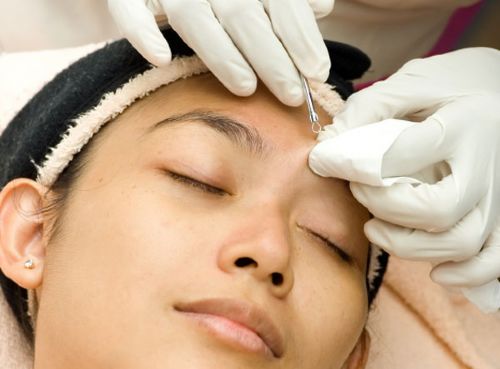
The esthetician should always wear gloves when performing extractions. The esthetician is dealing with body fluids, and if she doesn’t wear gloves, it means she’s not that clean or careful in her work.
Fingers Or Extraction Tool?
Estheticians can remove blackheads with their index fingers, covered in cotton, by applying pressure to either side of the blackhead and gently coaxing it from the follicle. Some estheticians prefer to use a stainless steel tool that has a loop at one end. It’s faster and can get into awkward places, but some clients find it hurts more.
Whiteheads Are Harder To Remove.
Whiteheads have a layer of dead skin cells that have grown over the plug of sebum. The esthetician has to make an opening in the skin with a lancet, a small, sharp, surgical blade that comes in a sterile packet. These are harder to remove and take more time. The use of lancets is illegal in some states, and some resort and hotel spas don’t allow their estheticians to use them.
Extractions Can Hurt.
Different people have different pain thresholds. People with thicker, oiler skin are usually less sensitive, while people with thinner skin are usually more sensitive. Estheticians also vary in how aggressive they are. Speak up if it hurts too much.
Extractions Can Cause Damage If Not Done Correctly.
Too much pressure can cause broken capillaries on people with sensitive, reddened skin (called couperouse). It can cause dark spots called hyperpigmentation on people with black skin. And inflamed areas should not be extracted, because the infection might spread.
Don’t Have An Extraction Marathon.
Extractions shouldn’t last more than ten minutes. If you have a lot of blackheads and whiteheads, don’t expect to get rid of them in one session. Too many extractions at one time can be traumatic to the skin.
Extractions Are Important!
If you have acne or blemishes, extractions are the most important part of the facial for you. Once the follicles are cleared out, your skin should start to improve. You may want to get facials every two weeks until your skin is clear. It’s also important to follow up with the right products and a good home skin care routine.
More
Laser Hair Removal
In this method, a laser destroys hair follicles with heat.
Sometimes it is recommended that a topical anesthetic product be used before a laser hair removal procedure, to minimize pain. In these cases, FDA recommends that consumers discuss with a medical professional the circumstances under which the cream should be used, and whether the use is appropriate.
Those who decide to use a skin-numbing product should follow the directions of a health care provider and consider using a product that contains the lowest amount of anesthetic drugs possible. FDA’s Center for Drug Evaluation and Research has received reports of serious and life-threatening side effects after use of large amounts of skin-numbing products for laser hair removal.
Side effects of laser hair removal can include blistering, discoloration after treatment, swelling, redness, and scarring. Sunlight should be avoided during healing after the procedure.
Epilators: Needle, Electrolysis, and Tweezers
Needle epilators introduce a fine wire close to the hair shaft, under the skin, and into the hair follicle. An electric current travels down the wire and destroys the hair root at the bottom of the follicle, and the loosened hair is removed with tweezers.
Medical electrolysis devices destroy hair growth with a shortwave radio frequency after a thin probe is placed in the hair follicle. Risks from these methods include infection from an unsterile needle and scarring from improper technique. Electrolysis is considered a permanent hair removal method, since it destroys the hair follicle. It requires a series of appointments over a period of time.
Tweezer epilators also use electric current to remove hair. The tweezers grasp the hair close to the skin, and energy is applied at the tip of the tweezer. There is no body of significant information establishing the effectiveness of the tweezer epilator to permanently remove hair.
Depilatories
Available in gel, cream, lotion, aerosol, and roll-on forms, depilatories are highly alkaline (or, in some cases, acidic) formulations that affect the protein structure of the hair, causing it to dissolve into a jellylike mass that the user can easily wipe from the skin. Consumers should carefully follow instructions and heed all warnings on the product label.
Waxing, Sugaring, and Threading
Unlike chemical depilatories that remove hair at the skin’s surface, these methods pluck hairs out of the follicle, below the surface.
With waxing, a layer of melted wax is applied to the skin and allowed to harden. (Cold waxes, which are soft at room temperature, allow the user to skip the steps of melting and hardening.) It is then pulled off quickly in the opposite direction of the hair growth, taking the uprooted hair with it. Labeling of waxes may caution that these products should not be used by people with diabetes and circulatory problems. Waxes should not be used over varicose veins, moles, or warts. Waxes also shouldn’t be used on eyelashes, the nose, ears, or on nipples, genital areas, or on irritated, chapped, or sunburned skin. As with chemical depilatories, it can be a good idea to do a preliminary test on a small area for allergic reaction or irritation.
Sugaring is similar to waxing. A heated sugar mixture is spread on the skin, sometimes covered with a strip of fabric, and then lifted off to remove hair. Threading is an ancient technique in which a loop of thread is rotated across the skin to pluck the hair. All of these techniques may cause skin irritation and infection.
Shaving
Shaving hair only when it’s wet, and shaving in the direction in which the hairs lie, can help lessen skin irritation and cuts. It’s important to use a clean razor with a sharp blade. Contrary to popular belief, shaving does not change the texture, color, or growth rate of hair.
More
What treatment is right for me? In other words, don’t ask the doctor for a specific procedure. Instead, explain the issues that need to be addressed and let the doctor offer the solution. ASDS doctors have extensive experience doing a variety of aesthetic treatments.
Is the specific laser, device or technique appropriate for my skin type? ASDS doctors know that cosmetic procedures and treatments are not one-size-fits-all. Each patient is evaluated for skin type as part of the initial evaluation.
How much does it cost? As a rule, almost all cosmetic surgery is considered “elective” and is not typically covered by insurance plans. Although some spas, salons and walk-in clinics offer cosmetic medical procedures at lower prices, consumers should be aware that “these discounted prices could put your health at risk as a result of the provider’s inadequate training and lack of expertise.”
What should I do to prepare for the treatment? Carefully following the physician’s guidelines before the procedure can greatly impact the final results.
Have you reviewed my medical history? Information that a patient may think is unrelated to their treatment may in fact play a key role in recovery or the length of a procedure. Patients should be sure to disclose their specific surgery history, any allergies and any pharmaceuticals, over-the-counter drugs or herbal supplements that they are taking at the time of their procedure.
What are my pain management and anesthesia options? To help avoid the risks associated with general anesthesia, ask the physician about alternative pain management options. Many techniques that are performed in a physician’s office can be done under local anesthesia, eliminating some side effects such as nausea and headaches that often accompany general anesthesia. Using a short-term local anesthesia may also eliminate complications that are sometimes related to general anesthesia, including allergies and heart problems.
What are the risks? Discuss the potential side effects of the proposed treatment, how often they occur and how they will be handled if they do occur.
What should I expect after the procedure is performed? Besides a discussion about the short-term and long-term effects, activity restrictions and the expected recovery period, doctors should share before-and-after photos of previous patients and discuss realistic expectations.
More
Liposuction is the leading option to diminish the appearance of stubborn bumps and lumps from localized fat and help sculpt areas to appear more toned and trim. Tumescent liposuction using local anesthesia as developed and performed by dermatologic surgeons is extremely safe. However, as with any invasive procedure, liposuction has risks. Some simple steps can help prevent potential complications before and after a liposuction procedure. Researching the procedure and doctor, having realistic expectations, using local anesthesia and following post-operative directions are just a few guidelines that will help to ensure the patient receives the best results.
ASDS offers some additional tips to ensure a positive result:
Do’s:
- Do your research: There is a lot to consider when undergoing liposuction. Choosing a dermatologic surgeon at a reputable location is very important and could help to decrease complications.
- Do maintain a healthy weight before surgery: Liposuction is a procedure for shaping the body by removing localized fat in areas such as the abdomen, thighs, arms or neck. For best results, candidates should be close to normal-weight with firm, elastic skin. This is not a weight loss procedure.
- Do understand your options: There are several options to liposuction surgery. Tumescent liposuction, the safest procedure, uses local anesthesia, injecting the fat with a large amount of anesthetic liquid causing it to become firm, making the removal of fat easy and painless while leaving patients less bruised. Ultrasonic and laser-assisted liposuction technique liquefies fat upon removal, decreasing recovery time. These are sometimes useful adjuncts. It’s important that you speak with your doctor to choose the right procedure for you.
- Do follow post-operative directions carefully: Doctors make suggestions after surgery to further avoid complications. Moderate physical activity, such as walking, the day after surgery may reduce the risk of clotting. Also, in some cases, compression garments should be worn around the treated area to reduce swelling.
Don’ts:
- Don’t expect to look “skinny” the day after surgery: You will always look better immediately after a procedure but will not realize the final result for several months.
- Don’t hesitate to ask questions: Before a consultation with a dermatologic surgeon a patient should be prepared with a list of questions for their doctor. Questions should help the patient understand the liposuction process, what to expect after the procedure and learn more about the doctor’s training and experience.
- Don’t continue over-the-counter supplements: Products such as aspirin, vitamin E and some herbal products slow blood clotting. Additionally, some anti-inflammatory medications can increase the chances of bleeding during surgery. Prior to surgery, the doctor will discuss any medications and supplements you are taking and which ones should be discontinued.
- Don’t assume all areas are treatable: Most, but not all, body parts are amenable to treatment. The most popular areas include the neck, chest, arms, waist, hips, abdomen, buttocks, thighs, knees and ankles. Your dermatologic surgeon will tell you if you are a good candidate for the surgery.
More